
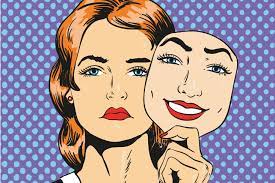

Today, the word “entitled” is bouncing around my brain. Not “entitlement,” but entitled. It started with me listening to the introduction to an audible book called “The Secret Thoughts of Successful Women.” The book is on Imposter Syndrome. In the book, Betty Rollin, a journalist with The New York Times, is quoted asking a young TV producer:
“When [a story] doesn’t work out, do you usually figure it’s your fault?”
“No,” he said, sounding sure.
“Suppose it is your fault. Does it make you feel terrible?”
“Nah,” he said.
“Why not?”
He looked at me. “Aren’t I entitled [emphasis added} to make a mistake once in a while?”
(Young, 2023, pp. 238-239)
It’s true. We are all allowed to make mistakes, to screw up, to ‘drop the ball.’ I agree with the man; we are entitled to make mistakes. Aren’t we? Even while typing this (I’m not sure what this is – a blog? An essay? Just a time-wasting activity that only I will read), MS Word keeps underlying in blue my grammatical errors and those dread red lines for misspelled words. We all make mistakes.
What I don’t like is when someone else points out that I’ve errored – hence why I am reading a book on Imposter Syndrome (IS). Here’s the quiz if you answer any as “yes,” then according to Young, you likely have IS.
- Do you chalk your success up to luck, timing, or computer error?
- Do you believe “If I can do it, anybody can”?
- Do you agonize over the smallest flaw in your work?
- Are you crushed by even constructive criticism, seeing it as evidence of your ineptness?
- When you do succeed, do you secretly feel like you fooled them again?
- Do you worry that it’s a matter of time before you’re “found out”?
(2023, p. 12)
I tick off all the boxes. Double checkmark on the question about criticism.
Young defines IS as fraudulent feelings related to one’s abilities or knowledge, particularly in the realm of academia or professions (p. 15). According to one author, people with IS are smart, and at some level, they know they are intelligent (Hibberd, 2019). For myself and the majority of my ADHD clients, we honestly believe ourselves to be stupid – dumber than a fence post. It’s hard to believe we are intelligent when we were told we were substandard in most of our childhood. Therefore, it is not surprising to me that people with ADHD, particularly those who were not diagnosed until adulthood, suffer from IS. I know I am stupid; I’m just terrified about when you will finally figure it out. So, I avoid staff meetings where we are to discuss our cases, large crowds of strangers (especially if I am introduced as Dr. Taylor), or even writing (including this whatever-you-call-it paper.
I am so anxious about being caught making a mistake that it doesn’t dawn on me that I am entitled to screw up. I am human too. Let me clarify, I don’t refer to making mistakes because I’m being too lazy to check the white load for that one red sock, or I just don’t care enough to be diligent because the task is incredibly boring, and I could care less about balancing my chequebook. I am referring to honest errors; when I find them, I fix them.
Oh, and I make mistakes. While studying for undergrad, my classmates nicknamed me “Dory” after the forgetful fish in “Finding Nemo.” I have been told on multiple occasions that I would be the perfect absent-minded professor. And when I finally got the chance to teach – I lived up to that perception, no matter how hard I tried. So, I am no stranger to making mistakes or sometimes looking silly because of them. Believe me when I say I am no perfectionist. I fuck up on a daily basis. But these are minor things, like tripping because I didn’t pick up my feet enough over the same stretch of carpet that I always trip, or losing my keys/wallet/charger again because I got distracted while putting my groceries away and forgot I sat them down in the freezer. When it comes to my work, having to talk to colleagues or anyone who is likely to figure out I am bluffing, even friends who have known me for decades (and called me Dory) – I am terrified. I meet the criteria for Imposter Syndrome.
For me, it is not the fear of making an error at the root but rather the fear of the mistake being caught or noticed by someone else. I have been pondering this all day – why does it bother me so much? As the producer pointed out, we are all humans, after all – entitled to make mistakes. Then the memories began to flitter through my mind of times when someone else caught my mistake and how I felt chastised. I remember having never been late for work for three years, and after a near-perfect run – I fumbled and was late by 5 minutes. The store manager (I was selling computers back then) reacted as if this was a common occurrence for me. She raked me over the coals longer than I had been late for work. It’s these certain individuals who really drive me insane. It’s like winning the Stanley Cup for 12 years in a row, but because I came in second place one time, I needed to be reprimanded, scolded, or “corrected.” For these people, I am not entitled to error.
What comes to mind is the speech by Theodore Roosevelt, coined “The Man in the Arena.” It’s a wonderful speech about not listening to the critics, about how to win or lose. We are better than the naysayers as long as we have gotten into the arena. But what if the naysayer was from the arena as well? You would think that should make them more empathetic of our plight. Instead, they like to point out where you have fumbled, as if they have never screwed up once in their adult life.
For example, I recall talking to someone in my family about a social faux pas I had made. To be honest, I couldn’t even tell you what social error I had made because all I can recall is their response. I remember admitting that my main mistake was because I had made an assumption about a situation and then acted on that assumption. Whatever that was, it obviously did not turn out as I had planned. But to hear, “Oh Shelley, you should never make assumptions,” as if I were a 5-year-old kindergartener, not a 57-year-old professional woman, cut me to the quick. I initially thought, “They’re right! I need to stop making assumptions”. Followed with, “Oh my god, how am I going ever to stop making assumptions?!” Someone else (my family member), had caught my mistake, and I felt ashamed.
If you are a fan of Brené Brown, I am particularly fond of The Gifts of Imperfection (Brown, The Gifts of Imperfection, 2010), she defines shame as “the intense painful feeling or experience of believing that we are flawed and therefore unworthy of love and belonging—something we’ve experienced, done, or failed to do makes us unworthy of connection (2013). In just two words, “Oh, Shelley,” I sunk down into the abyss of shame. It wouldn’t be until several hours later when my psychology mind decided to reboot itself, that I started to analyze what had happened.
As far as I am aware, we humans are hardwired to make assumptions. Can you imagine what life would be like if we didn’t? Every time we got into our car, we would first have to test the tire pressure (we can’t assume they are still full), then we would start the car and get in and out to see that the turn signals work. We couldn’t even assume the mirrors were in the same position as we had left them. Even though most driver’s ed classes teach students about walking around the automobile, we don’t do it. We just hop in the car, slam the keys in the ignition, and if we are lucky, we will glance in the rear-view mirror to see if there is anybody behind us. We make assumptions to save time, and our assumptions serve us well most of the time. But not always.
The core is my belief that this family member was entitled to say what they did – and because I was the one who errored, I was not. This belief that I am not entitled to stand up for myself – or worse, I do stand up for myself, but I am unable to articulate my stand and therefore am in error for a second time. Somewhere I learned it’s better just to keep my mouth shut. My belief that I am not entitled to defend myself – right or wrong—has seriously damaged me throughout my life. I have allowed bullies to continue to demean me. I never personally confronted the man who sexually assaulted me as a child while he was still alive (oh, I told people about him – I just never had the nerve to go up to him, even as an adult, and say, “What you did was vile and wrong”). I never said to my family member, “Give me a break – in my world of human beings, we are entitled to make mistakes. You should try joining us down here.) I have kept silent, even though what I have wanted to do since I was a young teen was to be a writer. It’s taken me over a decade to write this first blog.
We are entitled to make mistakes – and by most scientists I know, the more, the merrier. It’s only through mistakes that we learn. And yet the stigma of failing, whether professionally like in the imposter syndrome or socially, there are so many mental disorders that grow because of the fear of making mistakes (obsessive-compulsive personality disorder, eating disorders, substance abuse disorders, anxiety, depression, narcissism, etc.) I wish when I was younger, when my family member first started being condescending, that someone had coached me and said to me, “The next time that so-and-so says anything like that, you just turn to them and say……”
On a final note. I wish the naysayers and critics in leadership roles or even peers, would mirror the actions of Mr. Benjamin Zander. Benjamin is a renowned orchestra conductor and director of the Boston Philharmonic Orchestra and Boston Philharmonic Youth Orchestra. In his book, The Art of Possibility (Zander & Zander, 2000), he shares how he mentors musicians in his orchestras. He recounts an event in which the orchestra was performing of a particularly tricky piece of music. Just as the music was coming to a shift, one zealous violinist gave it all they had – at the wrong time. Normally Zander would have been able to dance the music around the faux pas magically, but there was no salvaging it for this particular piece of music. Zander simply stopped the orchestra and had them start again – and it was completed perfectly. After the concert, some musicians were curious about who made such a grievance and public error. Zander said he didn’t care. He knew the musician had learned from their error – so why continue to the poor vinegar on the wound? My hat goes off to Mr. Zander. That was the most compassionate way to handle a mistake.
References
Brown, B. (2010). The Gifts of Imperfection. Center City, MI: Hazelden Information & Educational Services.
Brown, B. (2013, January 15). Shame vs. Guilt. Retrieved from Brené Brown: https://brenebrown.com/articles/2013/01/15/shame-v-guilt
Hibberd, J. (2019). The Imposter Cure: How to Stop Feeling Like a Fraud and Escape the Mind-Trap of Imposter Syndrome. London: Octopus .
Young, V. (2023). The Secret Thoughts of Successful Women: Why Capable People Suffer from the Imposter Syndrome and How to Thrive in Spite of It. (Revised ed.). New York, NY: Crown Business.
Zander, R. S., & Zander, B. (2000). Art of Possibility: Transforming Professional and Personal Life. Boston, MA: Harvard Business Review Press.
 A Taylor'd Life
For the better part of my life I had and I’m sure I still do have IS. Despite that, I consider myself quite successful regardless of all the mistakes or errors I’ve made. At least I’ve learned from them. I’ve stood up to quite a few bullies but also, have been destroyed by them. I’ve learned to never allow that to happen again. This paper, essay or whatever the hell you want to call it made me realize a couple of things. I make a lot of mistakes but I’m usually the only one that knows it, yet I’m the first one to point out my mistakes should the opportunity present itself. I think to make other people feel better about themselves should they make a mistake and of course, I don’t want anyone thinking I’m perfect or did a perfect job at something. As for the people that like to point out a mistake that I made, they too may have made a mistake by pointing it out in a way that is harmful instead of helpful.
D.P.
LikeLike